Categories
Company Jobs Skills
4.67 (3 Ratings)
Logistics and Warehouse Operations: Basic Skills for Entry Level Executives
About Course
This course is for entry-level job seekers looking to start a career in logistics and warehouse operations. You may learn the basics, including safety protocols, inventory management, and equipment handling. Logistics and Warehouse Operations: Basic Skills for Entry Level Executives course may help you build basic skills like MIS, data entry, problem solving, communication, team working, and managing time effectively.
You may explore quality control, staying organized, and adapting to changes on the job. By the end, you may have the skills and knowledge to meet employers’ expectations.
Start your journey to a successful warehouse career—enroll today!
What I will learn?
- Demonstrate a solid understanding of logistics, warehouse and supply chain management principles.
- Implement effective inventory control strategies.
- Manage transportation logistics efficiently.
- Optimize warehouse operations for increased productivity.
- Perform accurate data entry tasks.
- Utilize Management Information Systems (MIS) effectively.
- Adhere to industry regulations and ethical standards.
- Provide strong support to the overall supply chain.
Course Curriculum
Introduction to the e-Learning Course
This introduction lesson will guide you step by step on how to make the most of this course.
Module 1: Introduction to Logistics and Warehouse Operations
Basic understanding of logistics and warehouse, types of warehouses, key roles in supply chain management and the skills required
-
-
-
Lesson 3: Types of Warehouses
-
Lesson 4: Logistics Workflow
-
Lesson 5: Key Roles in Logistics and Warehouse
-
QUIZ: Introduction to Logistics and Warehouse Operations
Module 2: Inventory Control and Management
Learn essential inventory control and management techniques to ensure accurate stock levels, optimize storage, and prevent discrepancies in a warehouse environment.
-
Lesson 1: Basics of Inventory Management
-
Lesson 2: Inventory Control Systems and Effective Strategies
-
Lesson 3: Managing Stock in a Supply Chain
-
Lesson 4: Inventory Tracking Methods
-
Lesson 5: Preventing Inventory Shrinkage
-
Lesson 6: Inventory Accuracy and Reporting
-
QUIZ: Inventory Control and Management
Module 3: Transportation Logistics
Explore transportation logistics, focusing on the planning, execution, and management of goods movement to enhance efficiency and reduce costs in supply chains.
-
Lesson 1: Basics of Transport Management
-
Lesson 2: Transportation Modes and Efficiency
-
Lesson 3: Managing Transportation in the Supply Chain
-
Lesson 4: Route Planning and Optimization
-
Lesson 5: Managing Delays and Transportation Issues
-
QUIZ: Transportation Logistics
Module 4: Warehouse Operations and Optimization
Discover best practices for optimizing warehouse operations, including layout design, workflow management, and strategies to improve productivity and efficiency.
-
Lesson 1: Standard Operating Procedures (SOPs)
-
Lesson 2: Warehouse Layout and Design
-
Lesson 3: Enhancing Warehouse Efficiency
-
Lesson 4: Material Handling and Equipment
-
QUIZ: Warehouse Operations and Optimization
Module 5: Order Fulfillment and Distribution
Understand the order fulfillment process, generating invoices, managing returns and queries, crucial for success in logistics operations.
-
Lesson 1: The Order Fulfillment Process
-
Lesson 2: Generating Invoices and Stock Transfer Notes (STN)
-
Lesson 3: Managing Returns and Reverse Logistics
-
Lesson 4: Handling Supply Queries
-
QUIZ: Order Fulfillment and Distribution
Module 6: Data Entry and MIS in Logistics
Learn the importance of accurate data entry and management information systems (MIS) in logistics for effective decision-making and operational efficiency.
-
Lesson 1: Introduction to MIS in Warehousing
-
Lesson 2: Management Information Systems (MIS) in Logistics
-
Lesson 3: Effective Use of MIS
-
Lesson 4: Data-Driven Decision Making
-
Quiz Data Entry and MIS in Logistics
Module 7: Technology in Logistics and Warehousing
Explore the latest technologies in logistics and warehousing, including automation and software solutions, to streamline processes and enhance operational performance.
-
Lesson 1: Logistics and Warehouse Technologies
-
Lesson 2: Warehouse Management Systems (WMS)
-
Lesson 3: Automation and Robotics in Warehousing
-
Lesson 4: Barcoding and RFID Technology
-
Lesson 5: Real-time Tracking Systems
-
Lesson 6: Emerging Technologies in Logistics
-
Quiz Technology in Logistics and Warehousing
Module 8: Laws, Compliance, and Regulations in Logistics and Warehousing
Understand the legal requirements, compliance standards, and regulations governing logistics and warehousing to ensure operations adhere to industry standards.
-
Lesson 1: Basic Legal Frameworks in Logistics and Warehousing
-
Lesson 2: Safety Regulations and Health Compliance
-
Lesson 3: Environmental Compliance in Logistics
-
Lesson 4: Auditing and Legal Requirements
-
QUIZ: Laws, Compliance, and Regulations in Logistics and Warehousing
Module 9: Soft Skills for Warehouse and Logistics Professionals
Develop essential soft skills, including communication, teamwork, and problem-solving, that enhance effectiveness and collaboration among logistics and warehouse professionals.
-
Lesson 1: Communication Skills
-
Lesson 2: Problem Solving and Decision-Making
-
Lesson 3: Time Management
-
Lesson 4: Work Ethic, Teamwork, and Collaboration
-
QUIZ: Soft Skills for Warehouse and Logistics Professionals
Module 10: Warehouse Leadership and Management
Learn key leadership and management skills necessary for guiding teams, fostering a positive work environment, and achieving operational goals in a warehouse setting.
-
Lesson 1: Essentials of Leadership
-
Lesson 2: Managing Teams
-
Lesson 3: Managing Performance
-
QUIZ: Warehouse Leadership and Management
Module 11: Course Recap and Resources
In this module, we’ll cover key final steps: avoiding common mistakes, reviewing course highlights, and understanding important terms to ensure your readiness for success.
-
Lesson 1: Common Mistakes and How to Prevent Them
-
Glossary of Key Terms
-
Course Recap
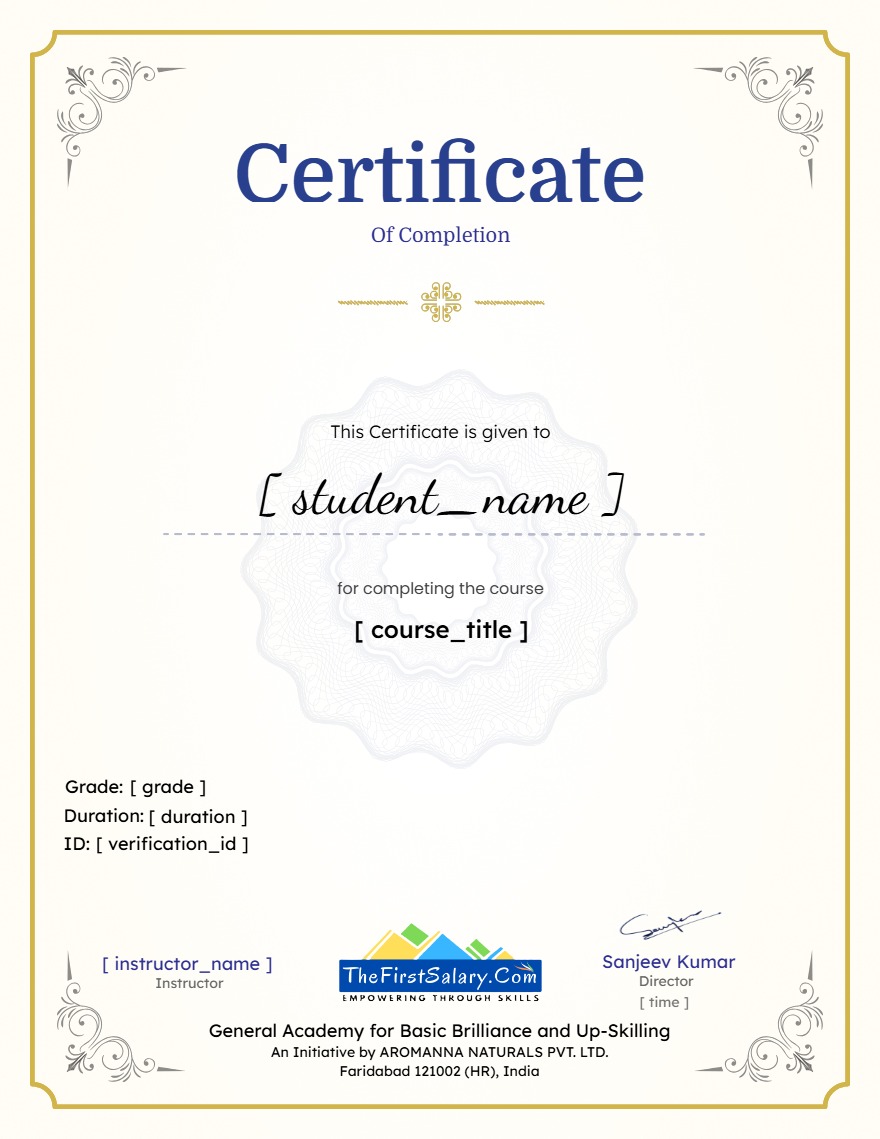
Earn a certificate of completion.
Earn this certificate of completion after enhancing your basic skills & increased knowledge base.
Student Ratings & Reviews
4.7
Total 3 Ratings
5
2 Ratings
4
1 Rating
3
0 Rating
2
0 Rating
1
0 Rating
Fantastic and very affordable course!
Material Includes
- 1. Online Study Materials: Engaging and informative lessons covering key aspects.
- 2. Quizzes: Short quizzes after most of the module to test your understanding and reinforce learning.
- 3. Examples: Cases and examples to illustrate the application of learned skills.
- 4. Certification: A certificate of completion upon successfully finishing the course.
$5.40
$27.06
(Includes all Tax)
-
LevelBeginner
-
Duration33 hours
-
Last Updated12/05/2026
-
Enrollment validityEnrollment validity: Lifetime
-
CertificateCertificate of completion
Hi, Welcome back!
A course by
Sanjeev Kumar
Director- General Academy for Basic Brilliance and Upskilling

TheFirstSalary.Com
General Academy for Basic Brilliance and Upskilling
Target Audience
- 1. Aspiring professionals seeking entry-level roles in logistics and warehouse operations, including data entry and MIS.
- 2. Logistics, Warehouse, Supply chain staff, Inventory control staff and operators
- 3. New job seekers in Logistics, Warehouse and distribution roles
- 4. Team leaders and floor managers
- 5. Forklift operators and material handlers
- 6. Maintenance staff in warehouses
- 7. Small business owners managing their own inventory operations
Requirements
- 1. Age: 21 years or above
- 2. Education: Graduates (B.A., B.Sc., B.Com. or equivalent).
- 3. Work Experience: Fresher or experience in e-Commerce Delivery, Logistics or Warehouse is a plus.
- 4. Time Commitment: Spend 5 to 6 weeks on the module. Dedicate 6 to 8 hours per week. Each module takes about 3 hours.
- 5. Device and Internet: Use a computer or mobile device with reliable internet. Know how to use online platforms and submit assignments.
- 6. Basic Computer Literacy: Ability to navigate online platforms, access online materials, and submit assignments online.
- 7. Language Proficiency: Basic understanding of English to comprehend course content and participate in activities. Translations in regional languages may be available, but accuracy is not guaranteed.
- 8. Motivation to Learn: A strong desire to improve your skills.
- 9. Industry Understanding: Know basics and want to learn new skills.
- 10. Open Mindset: Willingness to learn and apply new strategies for handling workplace challenges.
- 11. Active Participation: Engage with course materials, complete exercises, and participate in discussions.
- 12. Professional Attitude: Approach the course with a focus on personal growth and professional development.
- 13. Note-taking Supplies: Prepare to take notes and reflect on key concepts and strategies.

I'm going to recommend this to some of the field staff.