
Categories
NGO Jobs Skills
0 (0 Ratings)
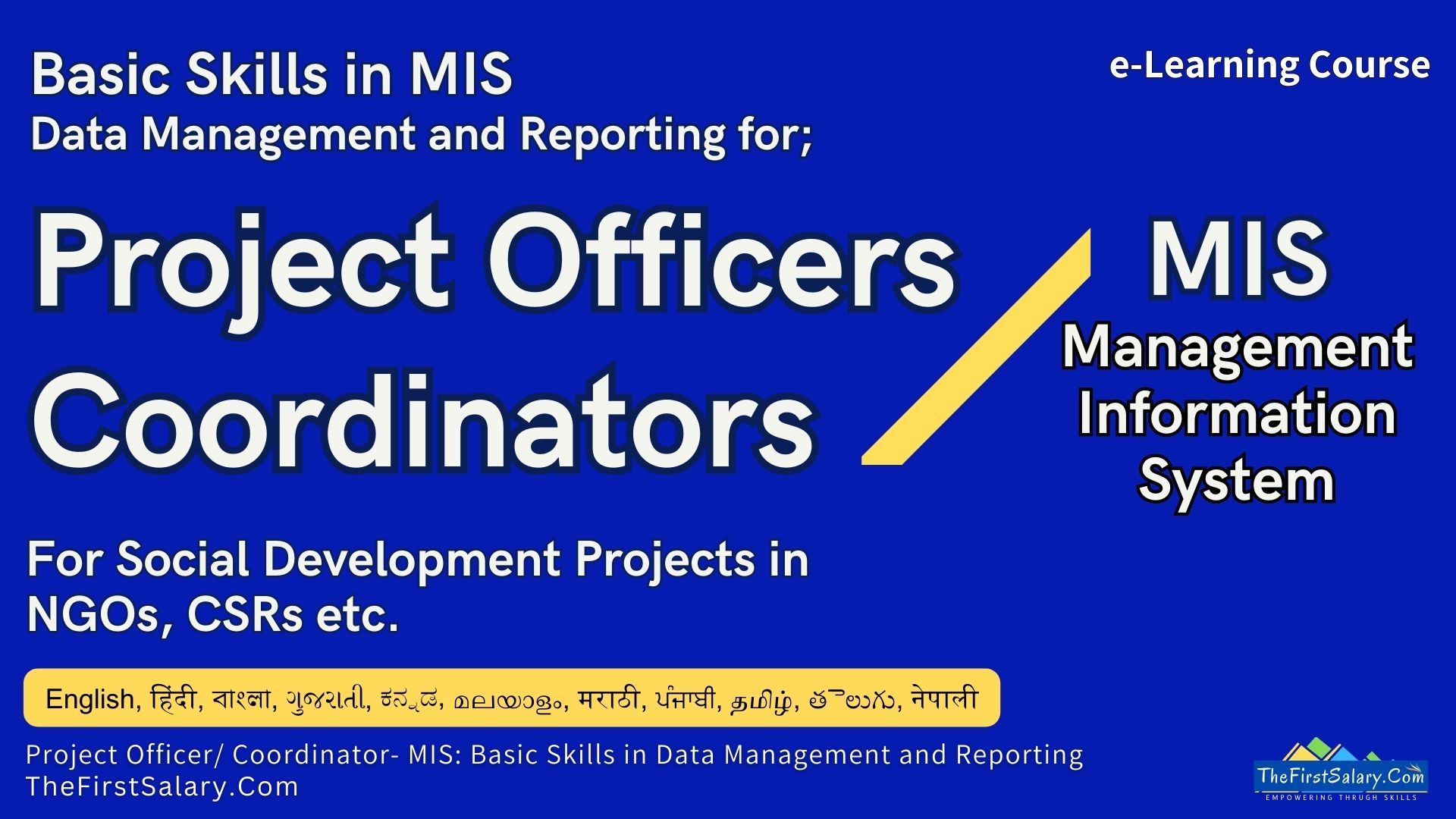
Project Officer MIS: Basic Skills in Data Management and Reporting
About Course
This course is designed for individuals working in NGOs, CSR initiatives, or other social development projects with a basic background in data management. It is also ideal for those with experience in data management who aspire to work in these sectors. The course focuses on guiding participants to effectively use tools like Excel and Tableau for tasks such as data collection, analysis, and reporting, rather than teaching the tools themselves. It equips learners to confidently manage MIS tasks and support their teams with actionable insights.
What I will learn?
- Design User-Friendly MIS Systems: Learn to create effective, practical, and accessible management information systems tailored for NGOs.
- Analyze Data Trends Effectively: Understand how to identify patterns, interpret insights, and make data-driven decisions.
- Visualize Data with Tools: Master the use of Excel, Tableau, and similar software for creating impactful visual reports.
- Write Clear and Concise Reports: Gain skills in structuring, summarizing, and presenting data in professional formats.
- Ensure Data Quality Standards: Learn data validation, cleansing, and error-checking techniques for accuracy and reliability.
- Comply with Legal Guidelines: Understand data privacy laws, ethical practices, and compliance frameworks for NGOs.
- Handle Sensitive Information Safely: Master techniques for securing data and mitigating risks through disaster recovery plans.
- Collaborate with Stakeholders Effectively: Learn to engage with donors, government agencies, and field teams professionally.
- Prepare for Global Opportunities: Understand global MIS trends, emerging technologies, and international data management standards.
- Develop Soft and Technical Skills: Strengthen communication, cultural sensitivity, and advanced technological proficiency for career growth.
Course Curriculum
Introduction to the e-Learning Course
This introduction lesson will guide you step by step on how to make the most of this course.
Module 1: Introduction to MIS in NGOs
Learn the basics of MIS, its role in NGOs, and how it supports data-driven decision-making for better project outcomes and social impact.
Module 2: Fundamentals of Data Management
Understand data structures, types, and database systems while learning secure storage, organization, and regulatory compliance for effective NGO data management practices.
-
Lesson 1: Key Concepts and Principles of Data Management
-
Lesson 2: Data Collection, Storage, and Security
-
Lesson 3: Regulatory Framework for NGO Data Management
-
Quiz: Module 2: Fundamentals of Data Management
Module 3: Data Collection and Collation
Explore methods to design data collection frameworks, manage fieldwork challenges, and ensure accurate data verification and collation for reliable project reporting.
-
Lesson 1: Designing Data Collection Frameworks
-
Lesson 2: Field Data Collection and Data Points
-
Lesson 3: Data Entry, Verification, and Collation
-
Quiz: Module 3: Data Collection and Collation
Module 4: Data Cleansing and Quality Assurance
Learn techniques to clean raw data, correct errors, and implement quality control measures that ensure accuracy and reliability in data analysis and reporting.
-
Lesson 1: Identifying Data Errors and Inconsistencies
-
Lesson 2: Data Cleansing Techniques and Best Practices
-
Lesson 3: Ensuring Data Quality and Reliability
-
Quiz: Module 4: Data Cleansing and Quality Assurance
Module 5: Data Analysis and Informed Decision-Making
Learn basic data analysis techniques to extract actionable insights, identify patterns, and align findings with organizational objectives for effective decision-making.
-
Lesson 1: Data Interpretation and Analysis
-
Lesson 2: Utilizing Data for Informed Decision-Making
-
Lesson 3: Communicating Insights from Data
-
Quiz: Module 5: Data Analysis and Informed Decision-Making
Module 6: MIS Report Development
Develop skills to design user-friendly reports, create data visualizations, and present findings effectively using tools like Excel and Tableau for stakeholder communication.
-
Lesson 1: Crafting Effective MIS Report Templates and Writing Reports
-
Lesson 2: Data Analysis, Visualization, and Utilizing Technology
-
Lesson 3: Managing Comprehensive MIS Projects and Reports
-
Lesson 4: Communicating Data Findings and Recommendations
-
Lesson 5: Project Evaluation and Feedback Integration
-
Quiz: Module 6: MIS Report Development
Module 7: Statutory Requirements and Compliance
Gain knowledge about legal frameworks, data privacy policies, and ethical reporting practices to ensure compliance with regulatory requirements in NGO data management.
-
Lesson 1: Regulatory Compliance for NGO MIS Activities
-
Lesson 2: Data Privacy and Confidentiality
-
Lesson 3: Reporting on MIS Activities and Compliance
-
Quiz: Module 7: Statutory Requirements and Compliance
Module 8: Data Security and Disaster Recovery
Learn how to secure NGO data systems, mitigate risks, and implement disaster recovery plans to safeguard critical information against cyber threats and emergencies.
-
Lesson 1: Ensuring Data Security and Confidentiality
-
Lesson 2: Disaster Recovery and Backup Strategies for MIS Data
-
Lesson 3: Mitigating Data Risks
-
Quiz: Module 8: Data Security and Disaster Recovery
Module 9: Sector-Specific MIS Customization
Discover how to customize MIS for sectors like health, livelihoods, and education, integrating real-time monitoring and project-specific data management strategies.
-
Lesson 1: MIS for Health Projects
-
Lesson 2: MIS for Livelihood Projects
-
Lesson 3: MIS for Education Projects
-
Quiz: Module 9: Sector-Specific MIS Customization
Module 10: Soft Skills for MIS Professionals
Enhance communication, teamwork, and time management skills to effectively collaborate with teams, present data insights, and manage tasks efficiently in professional settings.
-
Lesson 1: Communication Skills for Data Discussions
-
Lesson 2: Teamwork and Collaboration in Data Management
-
Lesson 3: Time Management and Problem-Solving Skills
-
Quiz: Module 10: Soft Skills for MIS Professionals
Module 11: Ethics and Cultural Sensitivity in Data Management
Understand ethical data practices and cultural sensitivity, ensuring respect for local traditions, language barriers, and ethical compliance in NGO data management processes.
-
Lesson 1: Ethical Problems in Data Management
-
Lesson 2: Cultural Sensitivity in Data Collection
-
Lesson 3: Legal Frameworks and Ethical Compliance
-
Quiz: Module 11: Ethics and Cultural Sensitivity in Data Management
Module 12: Advanced Technology in MIS
Explore advanced data visualization tools and database management techniques to streamline data processes, ensuring accuracy and efficiency in modern MIS practices.
-
Lesson 1: Advanced Excel for MIS
-
Lesson 2: Introduction to Visualization Tools
-
Lesson 3: Database Management Basics
-
Quiz: Module 12: Advanced Technology in MIS
Module 13: Emerging Technologies in NGO MIS
Learn about emerging technologies like AI, IoT, and blockchain, and their applications in transforming NGO data management for improved project efficiency.
-
Lesson 1: Artificial Intelligence (AI) and Machine Learning (ML)
-
Lesson 2: Adapting to Digital Transformations
-
Lesson 3: Introduction to IoT (Internet of Things)
-
Lesson 4: Cloud Computing for NGO Data Management
-
Lesson 5: Blockchain for Data Transparency
-
Quiz: Module 13: Emerging Technologies in NGO MIS
Module 14: Career Advancement and Networking
Build professional profiles, develop networking strategies, and explore global career opportunities by aligning with international data management practices and standards.
-
Lesson 1: Advancing Your Career in MIS and Data Management
-
Lesson 2: Building a Professional Network in the NGO Sector
-
Lesson 3: Preparing for Global Opportunities
-
Assignment for Module 14: Career Advancement and Networking
Module 15: Course Recap and Resources
In this module, we’ll cover key final steps: avoiding common mistakes, reviewing course highlights, and understanding important terms to ensure your readiness for success.
-
Common Mistakes and How to Prevent Them
-
Glossary of Key Terms
-
Course Recap
Earn a certificate of completion.
Earn this certificate of completion after enhancing your basic skills & increased knowledge base.
Student Ratings & Reviews

No Review Yet
Material Includes
- 1. Online Study Materials: Engaging and informative lessons covering key aspects.
- 2. Quizzes: Short quizzes after most of the module to test your understanding and reinforce learning.
- 3. Examples: Cases and examples to illustrate the application of learned skills.
- 4. Certification: A certificate of completion upon successfully finishing the course.
Tags
Advanced MIS Tools for NGOs
Best Practices in NGO Reporting and Analytics
Career in MIS for NGOs
Career in NGO Data Management
Data Analysis for Effective Decision-Making in NGOs
Data Management Training for NGOs
Effective Reporting Strategies for NGO Projects
Emerging Technologies in NGO MIS
MIS for Monitoring and Evaluation in NGOs
MIS for Social Development Projects
MIS Skills for NGO Professionals
$5.40
$27.06
(Includes all Tax)
-
LevelExpert
-
Duration45 hours
-
Last Updated12/05/2026
-
Enrollment validityEnrollment validity: Lifetime
-
CertificateCertificate of completion
Hi, Welcome back!
A course by;

Sanjeev Kumar
Director- General Academy for Basic Brilliance and Upskilling

TheFirstSalary.Com
General Academy for Basic Brilliance and Upskilling
Target Audience
- 1. NGO Professionals: Individuals managing data, reporting, and information systems within NGOs, CSR, etc.
- 2. MIS Practitioners: Those with experience in data collection, analysis, or information system development seeking advanced knowledge.
- 3. Aspiring Project Officers: Graduates aiming for roles in MIS and project management within NGOs, CSR, etc.
- 4. Data Managers: Professionals responsible for managing, analyzing, and reporting data in NGOs, CSR, etc.
- 5. Field Coordinators and Supervisors: Personnel handling data collection, collation, and verification in field operations.
- 6. IT Enthusiasts: Individuals with technical backgrounds wanting to integrate MIS with social development projects.
- 7. Career Transition Seekers: Those planning to switch to roles in data management for NGOs, CSR, INGOs.
Requirements
- 1. Age: 21 years or above
- 2. Education: Bachelor’s degree in Computer Science, Information Technology, Statistics, or a related field.
- 3. Work Experience: 2 to 4 years of work experience in managing MIS for social development projects (preferred). Hands-on experience in advanced Excel, data analysis, or visualization tools (e.g., Tableau, Power BI) are advantageous. Familiarity with relevant legal frameworks for data management, including data privacy laws
- 4. Time Commitment: Can spend 6 to 8 weeks on the modules with 6 to 8 hours per week. Each module takes about 3 hours.
- 5. Device and Internet: Use a computer or mobile device with reliable internet. Know how to use online platforms and submit assignments.
- 6. Basic Computer Literacy: Ability to navigate online platforms, access online materials, and submit assignments online.
- 7. Language Proficiency: Good command of English, both written and verbal to comprehend course content and participate in activities. Translations in regional languages may be available, but accuracy is not guaranteed.
- 8. Motivation to Learn: A strong desire to improve your skills.
- 9. Understanding of Social Issues: Know basic social problems and want to make positive changes.
- 10. Open Mindset: Willingness to learn and apply new strategies for handling workplace challenges.
- 11. Active Participation: Engage with course materials, complete exercises, and participate in discussions.
- 12. Professional Attitude: Approach the course with a focus on personal growth and professional development.
- 13. Note-taking: Prepare to take notes and reflect on key concepts and strategies.