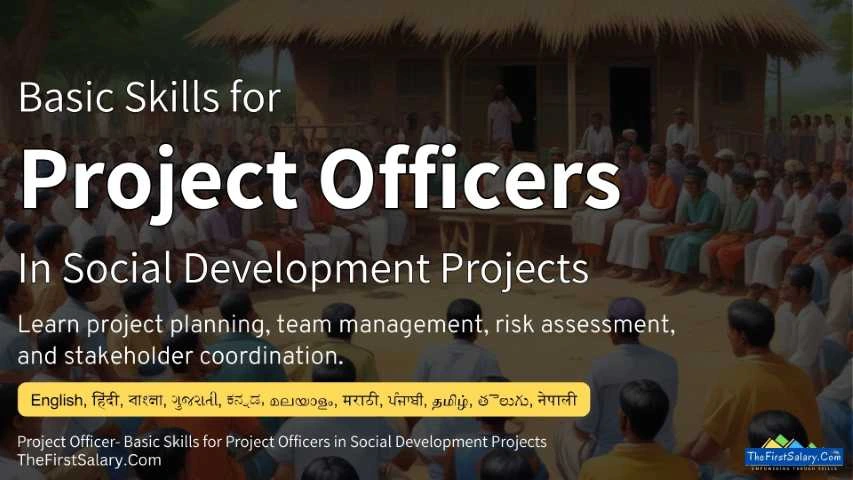
Course Content
Introduction to the e-Learning Course
This introduction lesson will guide you step by step on how to make the most of this course.
0/1
Module 1: Project Officer’s Role and Project Management
In Module 1, you will gain a comprehensive understanding of the role of a project officer and the fundamental principles of project management. From exploring responsibilities and key skills to understanding different project management methodologies, this module lays the groundwork for effective project leadership and execution.
0/4
Module 2: Project Planning and Design
This module deals in the details of project planning and design, essential for laying a strong foundation for successful project implementation. You will learn about project objectives, needs assessments, and brief of comprehensive project plans, timelines, and budgets, ensuring alignment with organizational goals and stakeholder expectations.
0/4
Module 3: Training and Capacity Development
Module 3 explores the critical role of training and capacity development in building the skills and competencies of project teams and beneficiaries. You will learn to design, deliver, and evaluate effective training programs, empowering you to enhance organizational capacity and drive project impact.
0/4
Module 4: Stakeholder Engagement and Communication
Module 4 focuses on stakeholder engagement and communication, exploring strategies for identifying key stakeholders, establishing effective communication channels, and managing stakeholder expectations and feedback. From building relationships to managing conflicts, this module equips you with the skills needed to engage stakeholders and foster collaboration.
0/4
Module 5: Introduction to Project Research and Analysis
This module provides an introduction to project research and analysis, equipping you with the tools and techniques needed to conduct research, analyze data, and report findings effectively. From understanding research methodologies to communicating research findings, this module lays the groundwork for evidence-based decision-making and project planning.
0/4
Module 6: Financial Management and Budgeting
This module explores financial management and budgeting, offering insights into the role of finance in project management, developing project budgets, and monitoring project finances. From understanding financial responsibilities to tracking expenses and revenue, this module equips you with the skills needed to ensure financial sustainability and project success.
0/4
Module 7: Risk Management
In Module 7, you will learn to identify, assess, and mitigate risks inherent in project implementation. From understanding different types of risks to developing robust risk mitigation strategies and contingency plans, this module prepares you to proactively manage risks throughout the project life-cycle, ensuring project success and resilience.
0/4
Module 8: Management Information Systems (MIS)
Module 8 introduces you to the role of Management Information Systems (MIS) in project management, providing an overview of different MIS types and functionalities. You will learn to implement and leverage MIS tools for project planning, monitoring, and evaluation, enhancing decision-making and performance management capabilities.
0/4
Module 9: Project Implementation
This module focuses on the practical aspects of project implementation, guiding you through the process of organizing project teams, managing resources, and executing project activities effectively. From initiating projects to monitoring progress and addressing challenges, this module equips you with the skills needed to drive projects to successful completion.
0/5
Module 10: Monitoring and Evaluation
Module 10 explores the importance of monitoring and evaluation in project management, offering insights into designing monitoring and evaluation frameworks, collecting and analyzing project data, and using evaluation findings to improve project performance and outcomes. This module empowers you to harness data-driven insights for continuous improvement and impact assessment.
0/4
Module 11: Reporting and Documentation
This module emphasis the importance of effective reporting and documentation in project management, guiding you through the process of writing project reports, documenting project processes, and using visual communication techniques for reporting. From capturing project progress to communicating findings, this module emphasizes the significance of clear and concise documentation for project success.
0/4
Module 12: Case Studies and Success Stories
Module 12 offers insights into real-life project examples and success stories, providing valuable lessons and best practices for project management. By analyzing case studies and sharing success stories, this module inspires and motivates stakeholders, fostering a culture of learning and innovation.
0/4
Module 13: Team Leadership, Collaboration & Resolving Conflicts
Module 13 describes in brief, the principles of team leadership and collaboration, guiding you through the process of building and leading effective project teams, fostering collaboration and teamwork, and resolving conflicts. From enhancing leadership skills to creating a positive work environment, this module empowers you to drive team performance and project success.
0/4
Module 14: Time Management and Organizational Skills
Module 14 focuses on time management and organizational skills, essential for managing project priorities and balancing multiple responsibilities effectively. From enhancing time management techniques to improving organizational skills, this module empowers you to optimize productivity, maintain work-life balance, and avoid burnout.
0/4
Module 15: Communication and Interpersonal Skills
Module 15 explores effective communication and interpersonal skills, crucial for building relationships, resolving conflicts, and negotiating agreements in project management contexts. From enhancing communication strategies to mastering negotiation and conflict resolution techniques, this module equips you with the skills needed to foster collaboration and drive project success.
0/4
Module 16: Strategic Thinking and Policy Influence
Module 16 deals in strategic thinking and policy influence, offering insights into developing strategic thinking skills, influencing policy decisions, and advocating for project priorities. From aligning project objectives with organizational strategies to engaging stakeholders and shaping policy dialogue, this module empowers you to drive positive change and impact.
0/4
Module 17: Decision Making and Strategic Planning
Module 17 focuses on decision making and strategic planning, guiding you through the process of understanding decision-making models and techniques, developing strategic plans, and implementing actionable goals. From making informed decisions to aligning project activities with organizational strategies, this module equips you with the skills needed to drive strategic outcomes and project success.
0/4
Module 18: Ethics and Compliance
Module 18 explores ethics and compliance in project management, providing insights into ethical considerations, legal and regulatory requirements, and transparency and accountability mechanisms. From understanding ethical principles to adhering to legal standards, this module emphasizes the importance of upholding integrity and ethical conduct in project activities.
0/4
Module 19: Community Development
Module 19 explores the principles and strategies of community development, providing insights into empowering communities, implementing community development projects, and monitoring community impact and outcomes. By engaging with communities and promoting participatory approaches, this module enables you to drive positive change and sustainable development.
0/4
Module 20: Introduction to Rural Development
Module 20 introduces you to the concepts and strategies of rural development, offering insights into addressing challenges and promoting inclusive and sustainable rural development initiatives. From understanding rural development theories to supporting economic development, this module equips you with the knowledge and skills needed to drive rural transformation.
0/4
Module 21: Continuous Improvement and Learning for Professional Growth of Project Officers
This module focuses on continuous improvement and learning for professional growth for a project officer, guiding you through the process of reflecting on project experiences, identifying areas for improvement and innovation, and implementing strategies for continuous learning and development. From fostering a culture of reflection to investing in professional development opportunities, this module empowers you to drive personal and organizational growth.
0/4
Module 22: Course Recap and Resources
In this module, we’ll cover key final steps: avoiding common mistakes, reviewing course highlights, and understanding important terms to ensure your readiness for success.
0/3
Project Officer: Basic Skills for Social Development Projects

How to Use This Course Effectively

Welcome to the e-Learning Course!

1. Welcome and Overview

Welcome to this e-learning course! 
This introduction lesson will guide you step by step on how to make the most of this course. Whatever course you have enrolled, this guide will help you navigate and succeed in your learning journey. This course is structured to help you gain the basic knowledge and skills needed to perform you job profile. As you go through each lesson, take your time to absorb the information and engage with the content.

Remember, each learner must complete all the lessons, assignments, and quizzes to mark the course as complete. Only after completion will you be able to access your certificate of completion.

2. Course Structure

The course is divided into modules, each containing lessons, subtopics, examples, and practical applications. Here’s what to expect:

» Modules: Each module covers a main theme or area of focus.

» Lessons: Within each module, lessons focus on specific topics.

» Subtopics: These break down the lesson further, giving you in-depth knowledge.

» Examples: Real-life or relatable scenarios to help you understand concepts better.

» Practical Applications: Tasks or ideas for applying what you’ve learned to real situations.

3. Navigating the Platform

You can access all the modules and lessons from the main course dashboard. Follow these steps:

» Login: Ensure you’re logged in to access your course.

» Dashboard: The dashboard displays all the details on your registrations including enrolled courses. Visit the menu section in your dashboard and then click on Enrolled Courses to access the course you’re starting with.

» Modules, Lessons, Assignments, Quizzes: All the courses have a menu section at top right corner, open the menu and then module you want to start with and then open the lessons within each module. You can see subtopics listed under each lesson. At the end of the module, you may see assignment or Quizzes which you should attempt after thoroughly reading the lesson.

» Next Lesson: After completing one lesson, you can proceed to the next by clicking “Mark as Complete” button. You may have option to go back to previous lesson by clicking “Previous” button. 

» Queries: There is a Q&A section within the course where you can ask questions if you encounter any doubts while learning. Use this feature to stay clear about the course content.

4. Understanding Lessons and Subtopics

For each lesson:

» Start by reading the main topic and subtopics thoroughly.

» Pay attention to key terms and important ideas.

» Make notes or highlight points that stand out for you.

» Engage with the content by thinking about how it connects to real-life situations or your own experiences.

5. Interactive Elements

Some lessons may include:

» Interactive Activities: These might include clickable elements or questions. Use them to test your understanding as you learn.

» Images/ Info-graphics: Some lessons may have images or info-graphics to explain the content. These offer visual aids for better understanding.

6. Examples and Practical Applications

Throughout the lessons, you will find examples that relate the concepts to practical situations. Use these to:

» Visualize how the theory works in the real world.

» Think about how you would handle similar scenarios.

» Apply the examples in your own work or daily life, if relevant.

7. Tasks and Assignments

Each module or lesson may include tasks or assignments:

» Read Carefully: Ensure you understand the task or assignments before starting.

» Apply the Knowledge: Complete task or assignments based on what you’ve learned.

» Submission: Follow the instructions on where and how to submit your assignments. Look for the submission button and writing space space.

Remember, you must complete all tasks or assignments to successfully finish the course.

8. Common Mistakes

A section on Common Mistakes will be included to help you avoid errors in your learning or tasks:

» Review this section before moving on to ensure you don’t fall into common traps.

» Use it as a checklist for your work and learning process.

9. FAQs and Help

There’s a Frequently Asked Questions (FAQs) section in the course. If you get stuck:

» Look at the FAQs for quick solutions.

» If your question isn’t answered, use the Q&A section to ask for clarifications.

» For any administrative or service-related queries, contact us via email or WhatsApp (details available on the contact page).
[Contact Us].

10. Quizzes and Assessments

At the end of some lessons or modules, you may find quizzes:

» Purpose: Quizzes are designed to test your knowledge and understanding.

» Taking the Quiz: Each quiz will have five attempts. The quiz may have two to five questions, and you must complete all questions in each attempt. If you feel your first attempt wasn’t good enough, review the lessons and take a second attempt and so on.

» View Results: After completing, you’ll often be able to see your score and correct answers. Your bet score will be considered for marking/ grading.

11. Tracking Your Progress

You can track your learning progress:

» The platform may show a progress bar or completion percentage on windows or mobile.

» You may see which lessons you’ve completed and what’s left to finish at sidebar menu. 

» Make sure to complete each lesson in order to ensure you cover all key points.

12. Course Duration and Access

Once enrolled, you will have access to the course for 180 days. It is advisable to complete the course as soon as possible within this time-frame. After completing it, you can still access the content for the rest of the duration to revise, especially if you’re in a new role or job.

13. Additional Courses

There may be related courses offered for free once you complete this course. Check the course page for details on any free add-on courses and the prerequisites for enrollment. You will need to complete the current course before gaining access to the add-on course.

14. Course Completion and Certificate

You must complete all lessons, quizzes, and assignments before the course can be marked as complete. Only then will you receive a completion certificate. This certificate can be downloaded directly from the platform in PDF only. As of now, we have disabled the downloading of image version of the certificate. 


15. Disclosure

Please note, the course and its reading materials are designed to serve as a basic guide. While we aim to provide accurate and current information, the course may not reflect the most up-to-date practices or regulations. We encourage learners to verify critical information with reliable and authentic sources relevant to their specific context. TheFirstSalary.Com holds no responsibility or accountability for any outdated or incorrect details.


Get Started Now!
Follow the steps outlined above and start by opening your first module today and explore the world of learning!. By staying consistent and engaging with each part of the course, you’ll soon be on your way to learning new skills. Learn the lessons, ask questions when needed, and make sure to finish all tasks. Let’s begin your journey to success.

Good luck!


0% Complete