Categories
Competency Skills
4.50 (2 Ratings)
Develop Non-Verbal Communication Skills To Overcome Professional Barriers
About Course
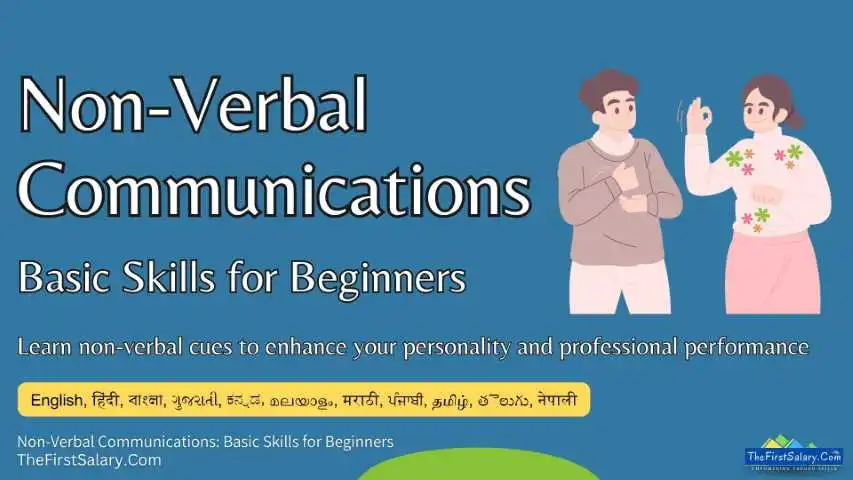
Understanding Non-Verbal Communication is crucial in both professional and personal settings. Non-Verbal Communication: Basic Skills for Beginners course explains the fundamentals of non-verbal cues, from body language to facial expressions, and the impact they have on interactions. You may explore the nuances of vocal tones, the significance of personal space, and techniques for effective presentations. Additionally, the Basics of Non-Verbal Communication Skills for Beginners course will cover conflict resolution, cultural sensitivity, negotiation skills, and strategies for handling difficult conversations. By the end of the course, participants will be equipped with the skills to build strong professional or business relationships and excel in various professional environments.
Non-Verbal Communication course is your gateway to grasping the art of non-verbal communication basics, a skill that transcends language barriers and empowers you to build trust, resolve conflicts, and foster lasting connections with your stakeholders.
Whether you're in employment, starting your small business, or being self-employed, join us on a journey where you'll discover the profound impact of your body language, facial expressions, vocal tone, and personal space management.
Unlock the power of non-verbal communication to elevate your career to new heights of success
What I will learn?
- Effective use of non-verbal cues.
- Present confidently in various settings.
- Build stronger, meaningful connections.
- Manage and resolve conflicts effectively.
- Deliver engaging and persuasive talks.
- Understand cultural non-verbal differences.
- Leverage non-verbal cues in negotiations.
- Improve client interactions and sales.
- Inspire and motivate through non-verbal techniques.
- Boost self-awareness and emotional intelligence.
Course Curriculum
Introduction to the e-Learning Course
This introduction lesson will guide you step by step on how to make the most of this course.
Module 1: Fundamentals of Non-Verbal Communication
In the dynamic world of employment or self-employment, where every interaction holds significance, non-verbal communication emerges as a silent yet powerful force. It's the language of gestures, expressions, and postures that often communicates more effectively than words alone. This module is describes the essential foundations of non-verbal communication. You may explore the vital importance of non-verbal cues in your career, simplify complex concepts with examples, and equip you with the skills to gain confidence through non-verbal communication.
Module 2: Understanding Body Language
In the journey of job or business success, understanding body language is like having a secret map to navigate the diverse terrains of interaction environment. This module is your guide to decoding body language in everyday interaction scenarios, gaining practical tips to convey assurance, building self-confidence through positive body language, and navigating facial expressions specific to job or business context.
-
Lesson 1: Different Types of Body Language
-
Lesson 2: Understanding Facial Expressions, Postures, and Gestures
-
Lesson 3: Decoding Body Language in Professional Interactions
-
Lesson 4: Conveying Confidence through Body Language
-
QUIZ: True or False
Module 3: Expressions and Connections
In jobs and businesses, where diverse backgrounds and languages intersect, learning non-verbal communication becomes a global force. This module deals into some practical stories of successful communication despite language barriers, confidence-boosting techniques through facial expressions, harnessing the potential of your non-verbal to verbal communications, and crafting a strong presence with non-verbal skills.
-
Lesson 1: Understanding Emotions and Their Expressions
-
Lesson 2: The Role of Empathy in Business/Professional Communication
-
Lesson 3: Learning Non-Verbal Communication for Confidence and Presence
-
QUIZ: True or False
Module 4: Vocal Power and Personal Space
In your job or business, your voice and understanding of personal space can be challenging assets. This module explores gaining confidence in spoken interactions, understanding personal space dynamics in your clients/ customers, and non-verbal approaches to create comfort in business dealings or interactions.
-
Lesson 1: Practising Your Voice for Effective Communication
-
Lesson 2: Practising Personal Space in Professional Communication
-
Quiz: True or False
Module 5: Effective Presentations and Conflict Resolution
In employment or self-employment, the ability to make effective presentations and navigate conflicts is invaluable. This module explores basics of elevating your presentation skills through non-verbal means, overcoming language barriers with impactful non-verbal communication, cultivating confidence in business pitches, confidence-building in conflict management, and resolving conflicts and disputes with non-verbal techniques.
-
Lesson 1: Learning Non-Verbal Communication in Presentations
-
Lesson 2: Breaking Barriers: Confident Communication for Success
-
Lesson 3: Navigating Conflict with Confidence and Non-Verbal Techniques
-
Quiz: True or False
Module 6: Building Strong Business Bonds and Cultural Sensitivity
Building robust business relationships is the foundation of success in any job or micro enterprises. This module explores strengthening relationships through non-verbal cues, networking strategies tailored for your profile, fostering confidence in lasting business connections, and understanding cultural nuances in non-verbal cues.
-
Lesson 1: Strengthening Professional Connections through Cultural Sensitivity
-
Lesson 2: Navigating Cultural Nuances and Tailored Networking
-
Quiz: True or False
Module 7: Adapting to Different Stakeholders and Negotiation Skills
In different businesses or job profiles, adapting non-verbal communication to different stakeholders and learning negotiation skills are indispensable. This module explores tailoring non-verbal communication for various stakeholders (e.g., clients, customers, suppliers, partners, employees, colleagues etc.), practical strategies to convey professionalism and trust, enhancing self-assuredness in diverse interactions, and effective negotiation techniques through non-verbal means.
-
Lesson 1: Effective Stakeholder Communication and Non-Verbal Skills
-
Lesson 2: Building Professionalism and Confidence in Communication
-
Lesson 3: Mastering Non-Verbal Negotiation Techniques
-
Quiz: True or False
Module 8: Handling Difficult Conversations and Feedback Skills
Learning the art of handling difficult conversations and feedback is a critical skill. This module explores managing challenging discussions using non-verbal techniques, practical examples of resolving tough issues with non-verbal communication, cultivating confidence in addressing sensitive topics, and interpreting non-verbal feedback from stakeholders in different businesses or job profiles.
-
Lesson 1: Mastering Active Listening and Non-Verbal Feedback
-
Lesson 2: Navigating Difficult Conversations with Confidence
-
Lesson 3: Building Confidence in Tough Talks
-
Quiz: True or False
Module 9: Non-Verbal Communication in Marketing and Sales
Effective non-verbal communication plays a pivotal role in marketing and sales efforts. This module explores leveraging non-verbal cues in marketing and sales, examples of successful sales pitches using non-verbal techniques, and gaining confidence in marketing and sales presentations.
-
Lesson 1: Enhancing Customer Engagement Through Non-Verbal Communication
-
Lesson 2: Harnessing Non-Verbal Cues for Effective Marketing Strategies
-
Lesson 3: Learning Sales Techniques Through Non-Verbal Cues
-
Quiz: True or False
Module 10: Non-Verbal Leadership
In the final module of this course, we explore the critical role of non-verbal communication in leadership.
-
Lesson 1: Communicating Leadership Through Non-Verbal Cues
-
Lesson 2: The Power of Non-Verbal Leadership
-
Lesson 3: Mastering Non-Verbal Communication in Job Interviews
-
Quiz: True or False
Module 11: Course Recap and Resources
In this module, we’ll cover key final steps: avoiding common mistakes, reviewing course highlights, and understanding important terms to ensure your readiness for success.
-
Common Mistakes and How to Prevent Them
-
Glossary of Key Terms
-
Course Recap
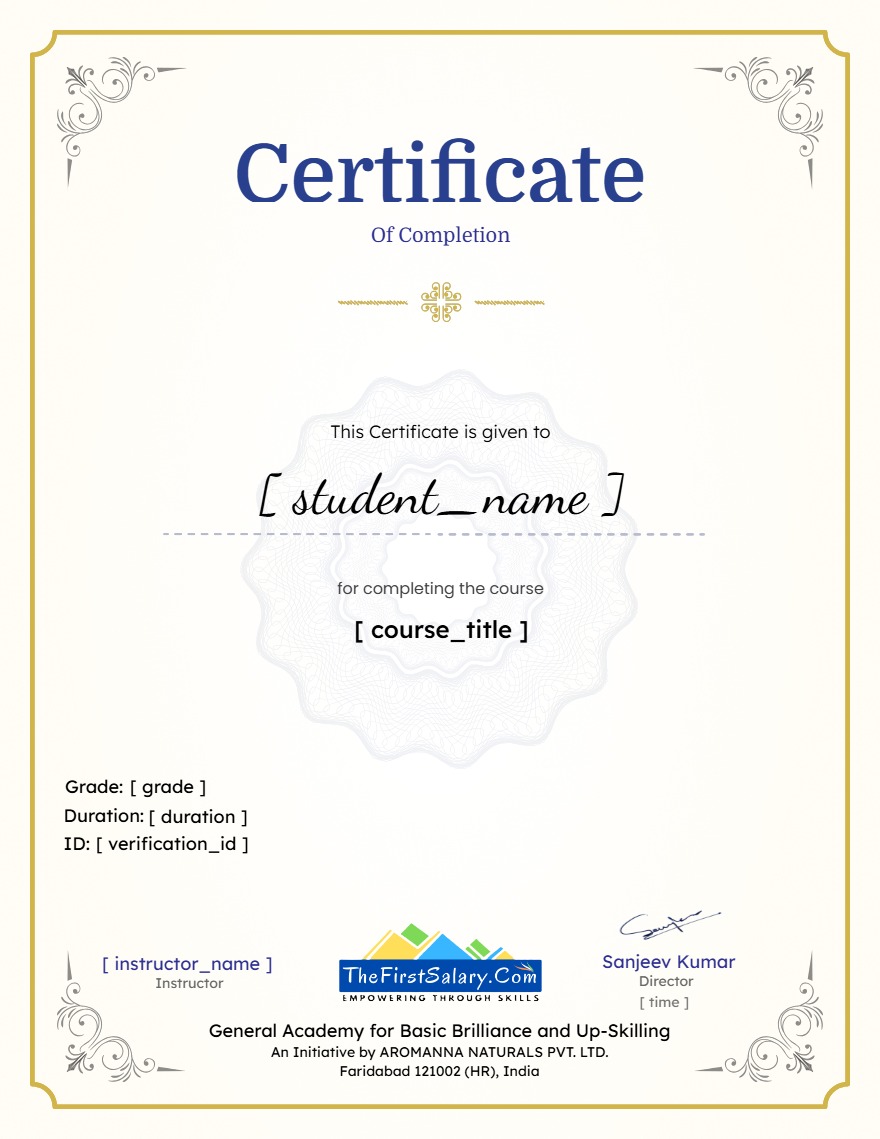
Earn a certificate of completion.
Earn this certificate of completion after enhancing your basic skills & increased knowledge base.
Student Ratings & Reviews
4.5
Total 2 Ratings
5
1 Rating
4
1 Rating
3
0 Rating
2
0 Rating
1
0 Rating
Excellent course! It teaches powerful non-verbal communication skills effectively.
Material Includes
- 1. Online Study Materials: Engaging and informative lessons covering key aspects.
- 2. Quizzes: Short quizzes after most of the module to test your understanding and reinforce learning.
- 3. Examples: Cases and examples to illustrate the application of learned skills.
- 4. Certification: A certificate of completion upon successfully finishing the course.
$2.70
$5.41
(Includes all Tax)
-
LevelBeginner
-
Duration33 hours
-
Last Updated12/05/2026
-
Enrollment validityEnrollment validity: Lifetime
-
CertificateCertificate of completion
Hi, Welcome back!
A course by
Sanjeev Kumar
Director- General Academy for Basic Brilliance and Upskilling

Sunita Kumar
CEO- General Academy for Basic Brilliance and Upskilling
Target Audience
- 1. Job Seekers
- 2. College Students
- 3. Working Professionals
- 4. Customer Service Representatives
- 5. Retail Employees
- 6. Entrepreneurs
- 7. Sales Personnel
- 8. Administrative Assistants
- 9. Hospitality Workers
Requirements
- 1. Age: 18+ years
- 2. Education: Min 10+2 or Graduate (B.A., B.Sc., B.Com. or equivalent).
- 3. Work Experience: Fresher or experienced with 1 to 3 years is a plus.
- 4. Time Commitment: To complete the 11-module course, you may need about 4 to 6 weeks, investing 6 to 8 hours per week, with each module taking approximately 3 hours.
- 5. Device and Internet: Computer or Mobile Device with Internet Access
- 6. Basic Computer Literacy: Ability to navigate online platforms, access online materials, and submit assignments online.
- 7. Language Proficiency: Basic understanding of English to comprehend course content and participate in activities. Translations in regional languages may be available, but accuracy is not guaranteed.
- 8. Motivation to Learn: A strong desire to improve your skills.
- 9. Open Mindset: Willingness to learn and apply new strategies for handling workplace challenges.
- 10. Active Participation: Engage with course materials, complete exercises, and participate in discussions.
- 11. Professional Attitude: Approach the course with a focus on personal growth and professional development.
- 12. Note-taking Supplies: Prepare to take notes and reflect on key concepts and strategies.